Hosting the whole family in an accessible home works when you treat the day as a flow problem, not a decoration problem. Guests need a clear path from the door to a seat, a seat that actually fits their bodies, and a bathroom they can reach without a traffic jam. The good news is that most of the work happens before anyone arrives.
The core plan is simple: walk your own route as a first-time guest would, clear the pathways your chair or walker needs, place seating with arms and back support where conversation happens, and keep one bathroom uncluttered for the day. Everything else — menu, music, timing — fits around that skeleton. This piece touches health and mobility needs, so treat it as information to inform your decisions, not advice for your specific situation.
What should you fix before guests arrive?
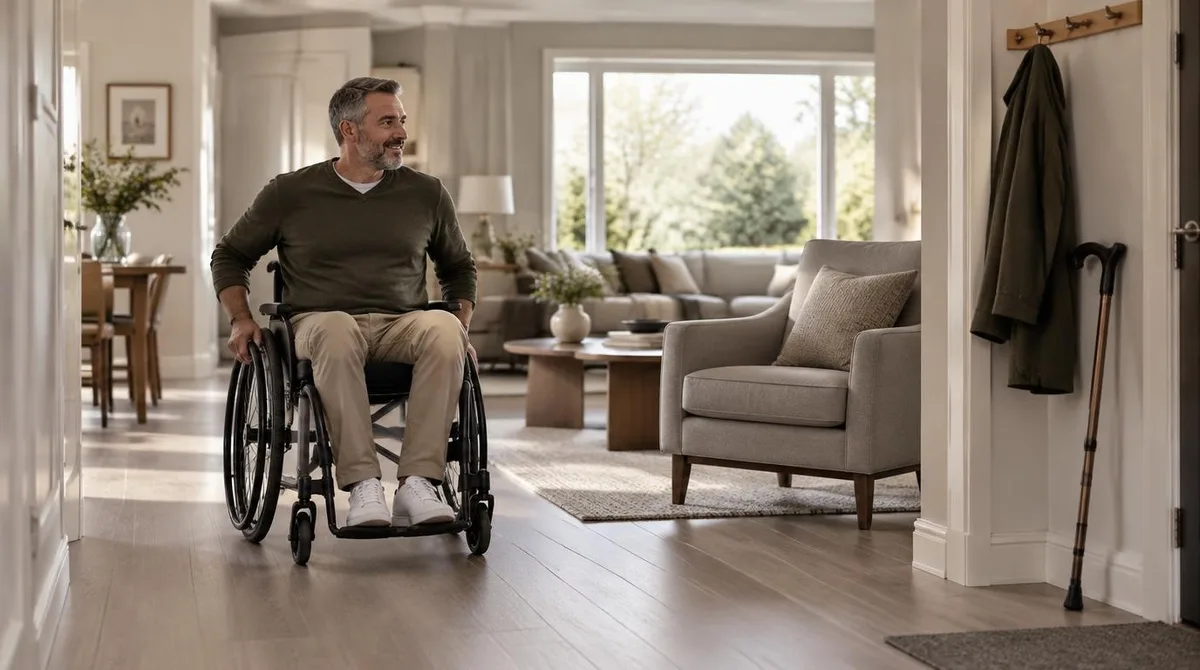
Walk the route a guest will take: front door, coat spot, living room, dining table, bathroom. Move anything that narrows that path below the width you actually need to pass comfortably — with a wheelchair, another person, or both. Rugs without grip, extension cords, and gift piles in hallways are the usual offenders. If you use mobility devices daily, your entryway setup for mobility devices probably already handles arrivals; the holiday job is mostly keeping it clear of extra coats and packages.
Then look at the room where people will actually sit. If your layout is tight, the principles in Small Living Room Layouts That Work for Wheelchairs apply on party day too: keep turning space open, push extra furniture out, and let guests come to the food rather than the reverse.
How do you seat a mixed-ability room?
Seat people where they can join the conversation, not wherever a chair happens to be empty. The Fine Homes & Living holiday hosting feature makes the point plainly: older relatives often do better in chairs with supportive backs and arms, and guests with mobility limitations need a comfortable, accessible place to sit without navigating crowded pathways. That is a seating plan, not an afterthought.
In practice that means a few decisions made in advance:
- Reserve one seat with arms and a firm cushion near the table for anyone who pushes up to stand. Arms are the handle.
- Leave a chair out entirely at the table where a wheelchair user will roll in, so the space is theirs without negotiation.
- Create one small conversational grouping — a sofa and two chairs — instead of lining every seat against the walls. The same feature notes that smaller groupings keep larger gatherings from feeling formal and stalled.
- Keep the path between seating, food, and bathroom free of bags and gift boxes all day, not just at arrival.
You do not need to buy furniture for one evening. Borrowing matching chairs or rearranging what you own covers most shortfalls, and if you are thinking longer term, Choosing Living Room Furniture That Ages With You covers the permanent version of this problem.
How do you handle the bathroom without a bottleneck?
Pick which bathroom guests use, and prepare only that one. Clear the counter of your daily equipment and supplies, put a spare roll where it is visible, and check the door swings open with the room's lights on. If your own morning routine depends on that counter, the trade-offs in Bathroom Counter Height, Mirror Placement, and Sink Accessibility are worth a reread before you strip it bare — a basket you can move in and out in one trip beats a permanent clear-out.
Two logistics moves prevent most congestion. First, spread arrival times: staggered invitations or a stated window keep four people from needing the same room in the same ten minutes. Second, know which guests need more time or privacy in the bathroom and build the schedule so nobody is waiting outside the door while dinner cools.
What can you delegate so you are not the bottleneck?
You are the host, not the whole kitchen. According to Taste of Home's roundup of holiday hosting tips, republished on Yahoo, recipe editor Maggie Knoebel says she started enjoying hosting once she stopped shouldering all the work herself, and community cook Cindy Nerat suggests keeping a list of needed dishes so that when someone asks what to bring, you can name a specific item instead of saying "whatever you want."
The same roundup is useful on timing. Plan the menu a few weeks out, write grocery lists with shopping dates, and prep anything that reheats well or serves cold before the day — the piece specifically warns against relying on one oven to keep every dish warm, and suggests slow-cooker and chilled dishes instead. A written hourly timeline working backward from dinnertime, padded with 20 to 30 minutes, keeps the day on track. If cooking from a seated position is part of your routine, A Kitchen Setup for One-Handed Cooking and Kitchen Storage for Wheelchair Users cover the everyday version of that workspace.
One more energy note: hosting is a long day, and the tactics in Energy-Saving Techniques for Daily Tasks at Home — batching trips, sitting while you work — apply directly to party prep.
What about drinks, dietary needs, and the day itself?
Set drinks away from the food table. Editor Lesley Balla, quoted in the Taste of Home roundup, sets up a drink station apart from the table so there is more room to move, covers the basics with one batched cocktail and a few staples, and always sets out nonalcoholic options like a premade punch. In an accessible home that separate station has a second benefit: it keeps people from clustering where the food — and the traffic — is.
Ask about dietary restrictions when you invite, not when people sit down. The Taste of Home piece, written partly from a gluten-free editor's experience, notes the holidays people remember are the ones where the host made them feel included at the table, and that alternative versions of holiday classics are easier than most hosts expect. Several filling sides cover most cases without a separate main.
On atmosphere, the Fine Homes & Living feature recommends background music that lets conversation stay the focus — a relaxed mix during dinner rather than anything guests must compete with — and warm lamps over harsh overhead light. Both are easy wins in a home where you already control the lighting for your own vision needs.
Practical steps: your hosting-day checklist
- Walk the guest route and clear it below your real passing width.
- Reserve arm chairs and a wheelchair space at the table before anyone arrives.
- Prepare one bathroom for guests; keep your supplies in a movable basket.
- Stagger arrivals so the door, bathroom, and hallway never peak at once.
- Assign dishes by name when guests offer to bring something.
- Prep make-ahead and cold dishes early; write a timeline backward from dinner.
- Set the drink station away from the food, with nonalcoholic options out.
- Keep the main pathways clear all day — assign one person to police them.
What this means: your accessible home is not a compromise venue the family tolerates. Run the flow, seat people properly, and protect your own energy, and it is simply the house where everyone can actually be together. The evidence from both hosting features points the same way — the details that matter are anticipation and logistics, and those are skills you already practice every day.